

We may earn money or products from the companies mentioned in this post.
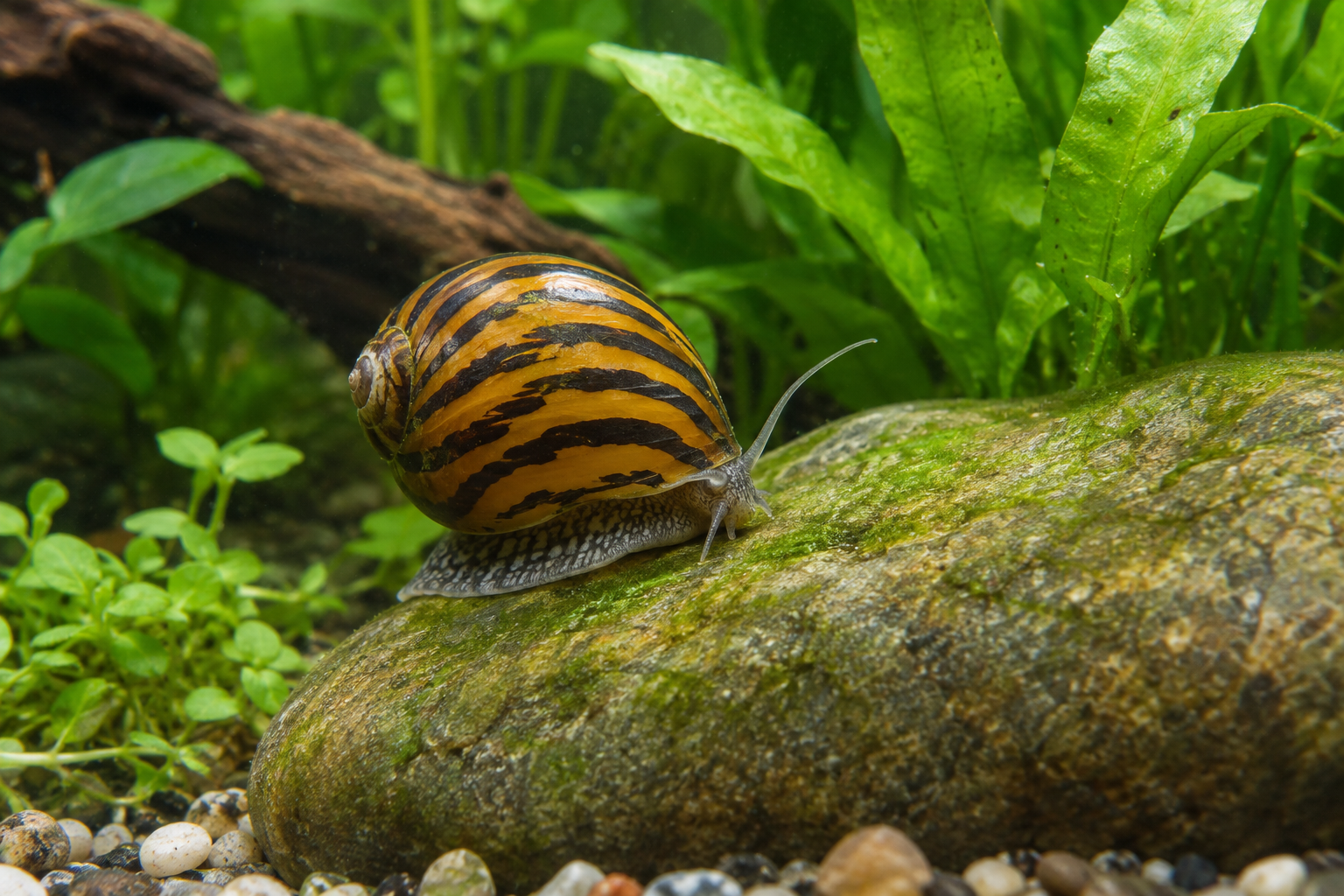
Freshwater aquarium snails can be welcome algae grazers, interesting pets or unexpected hitchhikers. The difference starts with identifying the snail: species vary in what they eat, how they reproduce and which tank mates suit them.
This guide explains the common types, everyday care and practical ways to manage unwanted numbers. Start with identification and a review of feeding before choosing a control method. If you are still planning your setup, our freshwater aquarium starter kit comparison explains what to consider.
Common freshwater aquarium snails
Nerite snails
Common aquarium nerites graze algae and biofilm. They are a useful option when you want a snail without a rapidly growing freshwater population. Females may leave hard white egg capsules on decor, but the commonly sold varieties do not establish breeding colonies in ordinary freshwater tanks. Their larval development requires brackish or marine conditions. [1], [3]
Nerites can climb above the waterline and escape. Use a secure lid, and choose a mature tank with enough natural grazing. Do not assume every individual will readily accept prepared foods.
Mystery snails
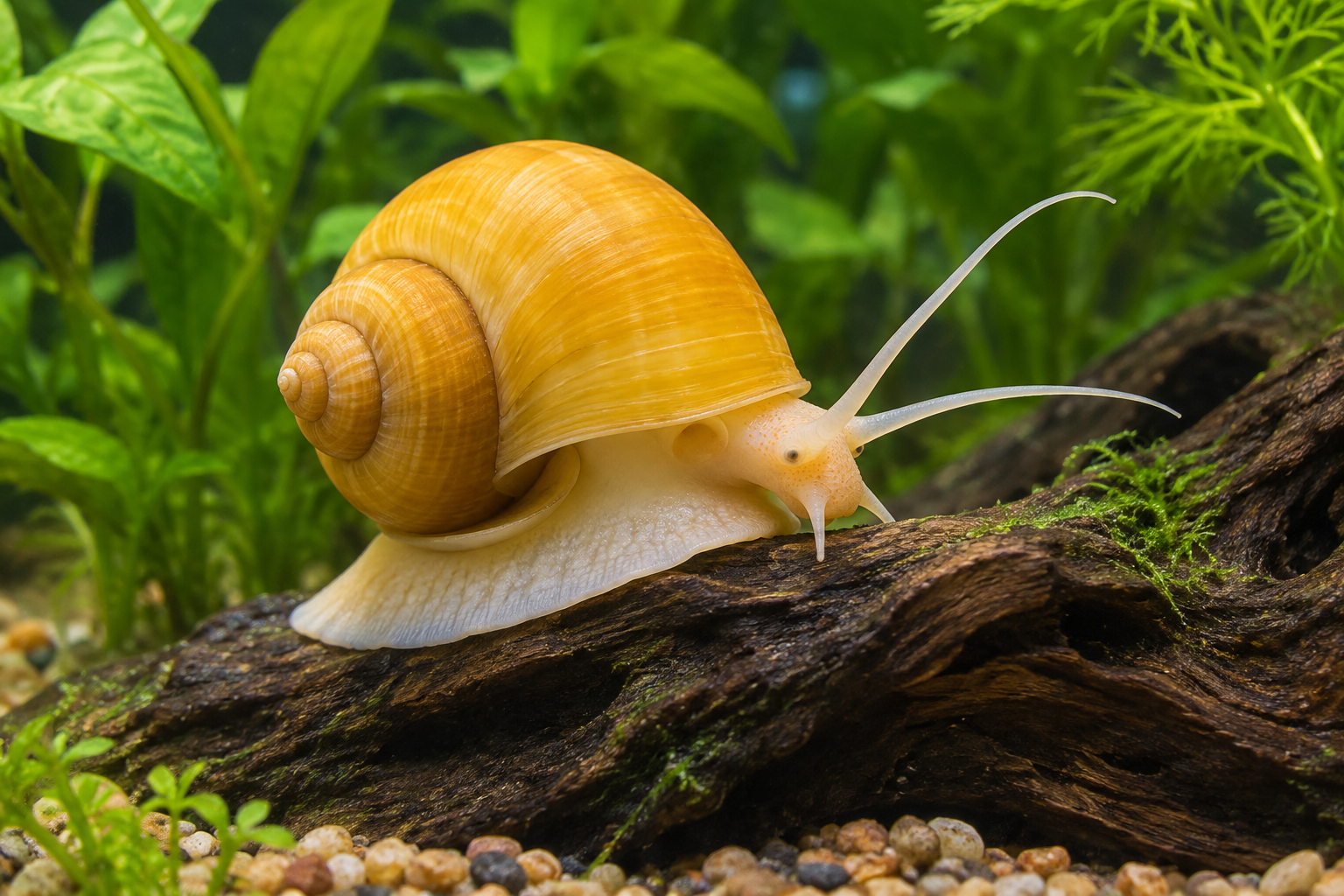
The colorful mystery snail commonly sold as Pomacea diffusa is a larger scavenger that needs deliberate feeding. It is generally safe with healthy aquarium plants, although it may eat dying vegetation or disturb newly planted stems. Avoid confusing it with other apple snails that readily eat healthy plants. [2]
Mystery snails have separate sexes and lay clutches above the water. Leave an air gap under a secure lid so they can reach the surface. A lone female may still produce fertile eggs after mating before purchase. [2]
Malaysian trumpet snails
These small, pointed snails burrow in substrate and are often more noticeable after dark. They consume leftover food and organic material. Females can reproduce without a mate and release live young, so a single introduction may establish a population. [4], [10]
Do not rely on their burrowing to replace substrate maintenance. A growing population is a reason to check food availability and accumulated debris.
Ramshorn and bladder snails
Ramshorns have flattened, coiled shells; bladder snails have small, elongated shells. Both may arrive on plants. They graze biofilm and consume scraps, and modest populations can be useful. [4]
Bladder snails can self-fertilize. Ramshorn breeding is more variable: research on planorbid snails reports differences between species, so avoid assuming every ramshorn has identical breeding behavior. Either group can multiply in an established aquarium when conditions allow. [4], [5]
Assassin snails
Assassin snails hunt other snails. They may help control unwanted populations, but they also require long-term care and supplemental food when prey becomes scarce. They can threaten ornamental snails, including larger animals in some circumstances. [6]
Reports of attacks on dwarf shrimp mean they are a poor choice when protecting shrimp is your priority. Manual removal avoids introducing another predator. [6], [7]
Benefits and limitations
Snails graze surfaces and consume material that might otherwise remain uneaten. They also produce waste. Adding snails does not remove the need for water changes, filtration or appropriate feeding.
A population increase can reveal abundant food: uneaten pellets, algae and decaying leaves all contribute. Review feeding and debris before considering a drastic cleanup. [4]
Everyday care and shell health
Choose a snail whose temperature and water requirements match the animals already in your tank. There is no single GH, KH or temperature range suitable for every freshwater snail. GH describes general hardness, while KH measures carbonate hardness and helps indicate buffering against pH changes. [12]
Calcium and suitable water chemistry support shell growth. Soft, acidic conditions can contribute to erosion. Test pH and general hardness before adding minerals; do not repeatedly adjust the tank by guesswork. For mystery snails, Aquarium Co-Op recommends 70–78°F (21–26°C), pH of at least 7.2 and GH above about 8 dGH. Use these as mystery-snail care guidance; check the needs of your other livestock before changing the tank. [2]
If shells show pitting or thinning, review water conditions and diet. Make changes gradually using a product intended for aquarium use and its directions. Crushed coral can also alter buffering and pH, so it is not simply a food supplement. Judge progress over time rather than expecting a supplement to instantly restore the shell. [1], [2]
Use a conditioner appropriate for chlorine and chloramine, and follow the supplier’s acclimation instructions. In an established community aquarium, ammonia and nitrite tests should read 0 ppm; track nitrate and keep up with appropriate partial water changes. A filter running for a day or two does not establish a nitrogen cycle. [12]
Keep openings around hoses and cables secure, and provide mystery snails with access to air at the surface under the lid. [1], [2]
Feeding without creating a population boom
Match food to the snail. Nerites depend heavily on natural grazing; mystery snails benefit from suitable sinking foods and vegetables such as blanched zucchini or leafy greens; assassins need animal-based food. Offer a small portion where you can see whether it is eaten. [1], [2], [6], [13]
Offer small portions and remove uneaten food before it deteriorates. Do not keep adding wafers just because snails gather around them. Equally, do not starve fish or intentionally kept snails to control hitchhikers.
A clean-looking aquarium may provide too little food for an algae grazer. Check whether the animal actually eats the supplement you offer rather than assuming food in the tank means it is feeding. [1]
Tank mates and medication
Peaceful community fish and non-predatory snails often coexist, but individual behavior matters. Bettas may nip exposed tentacles; snail-eating fish can injure or consume snails. Research adult size, social needs and compatibility before adding any fish. [1], [2]
Never buy a loach or puffer solely as a quick solution to snails. The fish needs an appropriate permanent home regardless of whether it eats the unwanted population. For help evaluating your community, see our Community Fish Compatibility guide.
Copper-based medications can harm snails and shrimp. Check the exact medication’s label and invertebrate warnings before treating a shared tank; a separate treatment tank may be appropriate. [2], [8]
Trace copper in a correctly dosed aquarium fertilizer is a different exposure. Its presence on an ingredient list alone does not make the product unsuitable. Seachem, for example, explains that the trace amount in Flourish is compatible with invertebrates when used as directed. Follow the specific manufacturer’s instructions rather than assuming all copper-containing products behave alike. [8]
How to control unwanted snail numbers
Review feeding and remove debris
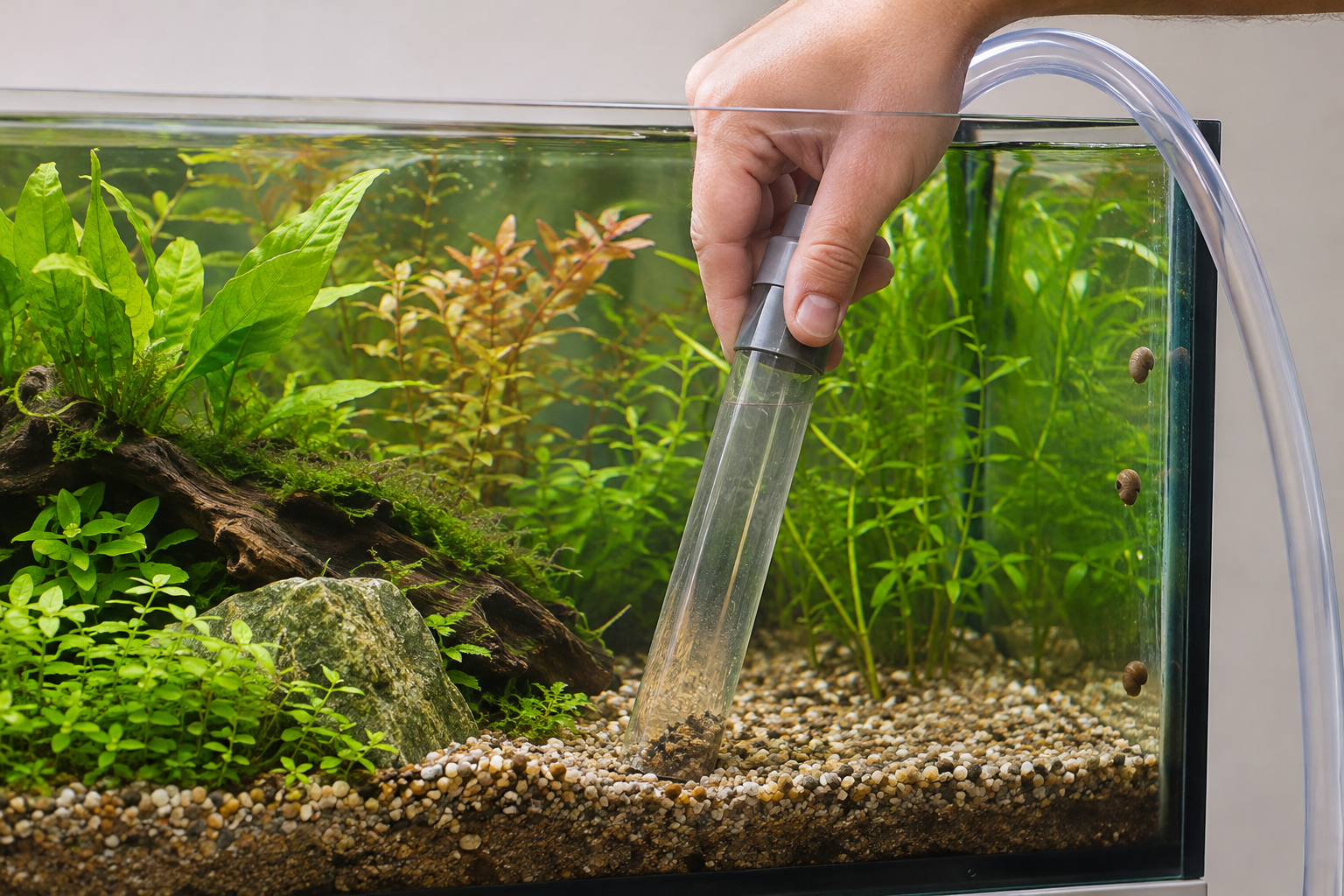
Watch what remains after feeding and adjust portions to your animals’ needs. Remove decaying leaves and siphon accessible debris during routine maintenance. Avoid an arbitrary percentage reduction for every tank. [11]
Remove snails and eggs manually
Collect visible snails and identifiable unwanted egg clutches. A siphon can help remove small snails during water changes. Repeat over time: hidden animals and eggs may remain after one cleanup. [4]
Use a monitored bait or trap
A small piece of blanched lettuce placed in a shallow dish can draw snails together. Check it after a few hours, lift out the bait and attached snails, and inspect the catch for shrimp. Remove bait before it deteriorates. A commercial trap must also suit the other animals in your tank. Trapping complements food management; it does not address the food supply by itself. [4], [9]
Consider predators only when compatible
Assassin snails introduce risks to snails you want to keep and potentially shrimp. Fish introduce their own space, diet and social requirements. Choose these animals because they fit your aquarium, not because a seller promises complete eradication. [6], [7]
Avoid a chemical quick fix
For a beginner community tank, prioritize food management and physical removal. A product that kills snails can also harm wanted invertebrates. Check every treatment against all tank inhabitants. [2], [4]
If numbers remain high, review hidden food sources and repeat removal. Keep notes on visible numbers during normal maintenance so you can judge the trend. A manageable population may be a more practical goal than eliminating every snail.
Preventing new hitchhikers
Inspect plants and decorations before adding them, including leaf undersides. Quarantine new plants separately when practical and remove visible snails and eggs. Aquarium Co-Op’s FAQ suggests four weeks of plant quarantine; this reduces introductions without guaranteeing a snail-free tank. [4], [11]
Plant dips are not interchangeable or harmless to every plant. If using one, follow a specific, verified protocol appropriate to that plant, including any neutralization and rinsing steps. Do not improvise a bleach, peroxide or alum concentration. [11]
Never release aquarium snails into waterways. Malaysian trumpet snails, for example, are assessed as a high invasion risk by the U.S. Fish and Wildlife Service. Ask a suitable aquarium shop about responsible rehoming, and check current local restrictions before buying or moving species. [10]
Frequently asked questions
Which snail is a good beginner choice?
A common aquarium nerite can suit a mature tank with sufficient algae and compatible water. A mystery snail suits keepers prepared to feed a larger scavenger. The best choice depends on the tank, not simply cleaning ability. [1], [2]
Why did tiny snails suddenly appear?
Small animals or eggs may have arrived on plants or other additions. Their numbers become more noticeable when food is plentiful. Inspect recent additions and accumulated organic material before changing the whole setup. [4]
Is a floating or motionless snail dead?
Not necessarily. Mystery snails can float because they hold air in their lungs. Check temperature and water tests, and observe the animal rather than declaring it dead from its position alone. If it stays motionless, gently inspect it for a reaction; an overpowering decomposition smell is a strong indication of death. Remove a clearly dead snail and test the water, because decomposition can worsen water quality. If uncertain, ask an experienced aquatic retailer for help. [1], [2], [7], [12]
What are the eggs on the glass or above the water?
Common nerites leave hard white capsules on submerged surfaces. Bladder and ramshorn snails typically leave gelatinous clutches. Mystery snails lay their clutches above the waterline. Identify the species before deciding how to manage the eggs. [1], [2], [4]
Will nerites overrun a freshwater aquarium?
Commonly sold aquarium nerites do not establish breeding populations in ordinary freshwater, even when females lay eggs. That makes them different from readily multiplying hitchhikers. [1]
Can snails live with shrimp?
Many non-predatory aquarium snails are compatible with dwarf shrimp when their water needs match. Assassin snails deserve extra caution because attacks have been reported. [1], [6], [7]
Do snails replace aquarium cleaning?
No. They eat some available material and add waste of their own. Keep up with appropriate feeding, filtration and routine maintenance.
How many snails can a small tank support?
There is no dependable universal snails-per-gallon rule. Size, species, available grazing, other livestock and water quality all matter. Start with one intentionally chosen snail, confirm it is feeding, and check water quality before considering more. Confirm the species’ minimum tank size before purchase.
How do you prevent mystery snail babies?
Inspect the lid and surfaces above the water for egg clutches and remove unwanted clutches before hatching. A female can retain sperm, so keeping only one adult does not guarantee that she cannot lay fertile eggs. Plan how to manage eggs before buying breeding adults. [2]
Choosing a manageable snail population
Identify the snail, meet its care needs and monitor the food available in the aquarium. For unwanted populations, start with maintenance and physical removal. For intentionally kept snails, choose compatible species and provide enough food without continually adding leftovers.
Sources and further reading
[1] Aquarium Co-Op — Nerite snail care.
[2] Aquarium Co-Op — Mystery snail care.
[3] Fishkeeper — Zebra nerite snail care.
[4] Aquarium Co-Op — Pest snail management.
[6] Aquatic Arts — Assassin snail care and compatibility.
[7] Flip Aquatics — Snail inactivity and assassin snail compatibility FAQs.
[8] Seachem — Copper in Flourish and invertebrate safety.
[9] Aquatic Arts — Snail trapping FAQ.
[11] Aquarium Co-Op — Removing unwanted aquarium snails FAQ.
[12] Aqueon — Freshwater aquarium water quality and nitrogen cycle.
Pingback: How to Clean a Freshwater Aquarium Without Disrupting Its Cycle - Fishkeeping Made Clear